
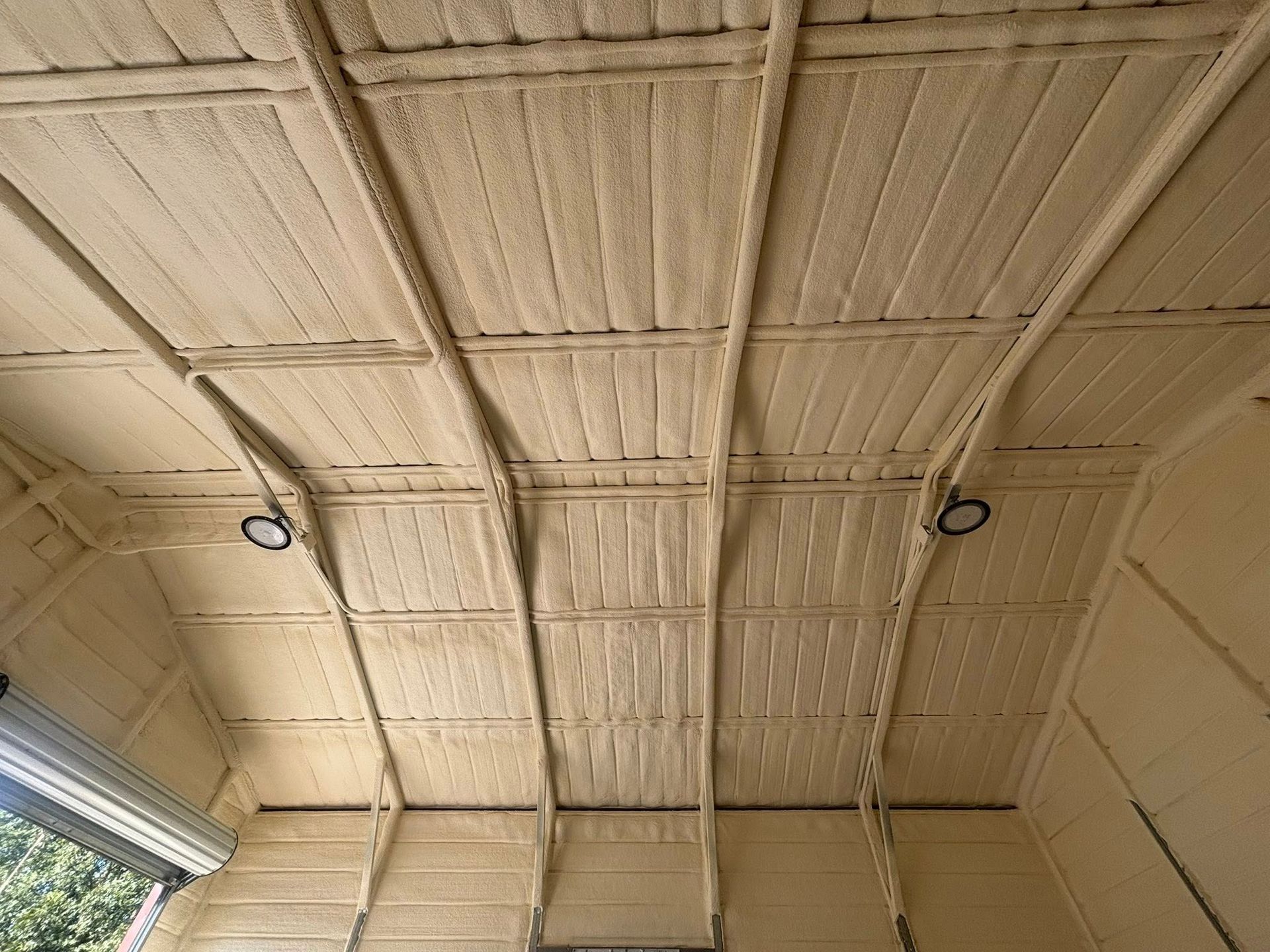
Temperature Control That Actually Lasts
Spray Foam Insulation in Bokchito for homes, shops, and barns experiencing high energy costs and inconsistent indoor temperatures
Oklahoma heat, humidity, and seasonal temperature swings create insulation challenges that standard fiberglass batts often fail to address. Rockin' B Fence Co. applies spray foam insulation to walls, ceilings, and rooflines in homes, shops, barns, garages, and commercial buildings throughout Bokchito and Bryan County. The expanding foam fills gaps, seals air leaks, and creates a continuous thermal barrier that reduces the workload on heating and cooling systems year-round.
Spray foam application involves preparing surfaces by clearing debris and moisture, protecting areas not being insulated with masking, and applying the two-component mixture that expands on contact to fill cavities and adhere to framing members. The foam cures into a rigid or semi-rigid layer depending on formulation, creating both insulation value and an air seal that prevents conditioned air from escaping through cracks around electrical boxes, plumbing penetrations, and rim joists. Moisture resistance is built into the material, which does not absorb water or support mold growth the way cellulose or fiberglass can when exposed to humidity.
Arrange an insulation evaluation to identify areas where heat gain and air leakage are driving up your utility costs.
Why Spray Foam Handles Oklahoma Climate Extremes
The closed-cell structure of spray foam insulation blocks heat transfer and moisture infiltration more effectively than materials that rely on trapped air pockets alone. In summer, foam prevents radiant heat from penetrating rooflines and wall cavities, keeping shop floors and living spaces cooler without overworking air conditioners. In winter, the same barrier stops warm air from escaping through attic spaces and uninsulated walls, maintaining stable indoor temperatures even when outdoor conditions fluctuate rapidly.
After installation, you'll notice reduced temperature variation between rooms, quieter indoor environments because foam dampens exterior noise, and lower monthly utility bills as HVAC systems cycle less frequently. The foam adheres directly to wood framing, metal studs, and masonry surfaces, creating a seal that remains intact even as buildings settle or materials expand with temperature changes. Condensation problems decrease because foam raises surface temperatures on interior walls, reducing the conditions that allow moisture to accumulate on cold surfaces.
Insulation projects are suited for both new construction and retrofits of existing structures. Decisions about foam thickness, application areas, and coverage density depend on building use, existing insulation condition, and whether moisture control or energy savings is the primary concern. Commercial buildings benefit from reduced HVAC demand, while agricultural structures gain climate stability that protects equipment and stored materials.
Property owners considering spray foam insulation typically want to understand application specifics, performance differences, and how the material responds to Oklahoma's humid summers and variable winter conditions.
Answers to Frequent Service Questions
What happens during spray foam application that requires ventilation and occupant absence?
The chemical reaction that causes foam to expand releases fumes during application and initial curing, requiring mechanical ventilation and a 24-hour vacancy period before occupants can safely return to enclosed spaces where foam was applied.
How does spray foam reduce utility costs compared to traditional batt insulation?
Foam's air-sealing properties eliminate the convective heat loss that occurs when air moves through gaps in batt insulation, often reducing heating and cooling costs by twenty to thirty percent in structures that previously had minimal or degraded insulation.
When should existing insulation be removed before spray foam installation?
Wet, moldy, or compressed insulation must be removed to allow proper foam adhesion and prevent trapping moisture against building materials, while dry, intact insulation in good condition can sometimes remain if foam will be applied to different surfaces or cavities.
What makes spray foam suitable for metal buildings and pole barns common in Bryan County?
Foam adheres directly to metal panels and prevents the condensation drip that occurs when humid air contacts cold metal surfaces, a persistent problem in uninsulated agricultural buildings during temperature swings.
How long does spray foam maintain its insulating performance after installation?
Properly applied closed-cell foam retains its R-value and structural integrity for decades without settling, compressing, or losing effectiveness, unlike fiberglass batts that can shift and degrade over time.
Rockin' B Fence Co. evaluates your building's insulation needs based on current energy use, structural design, and climate control goals. Contact us to schedule an assessment that identifies where foam application will deliver the most significant improvements in comfort and efficiency.