
Property Organization That Improves Livestock Management
Barn and Farm Fencing in Bokchito for Ranch Operations, Animal Containment, and Agricultural Perimeter Security
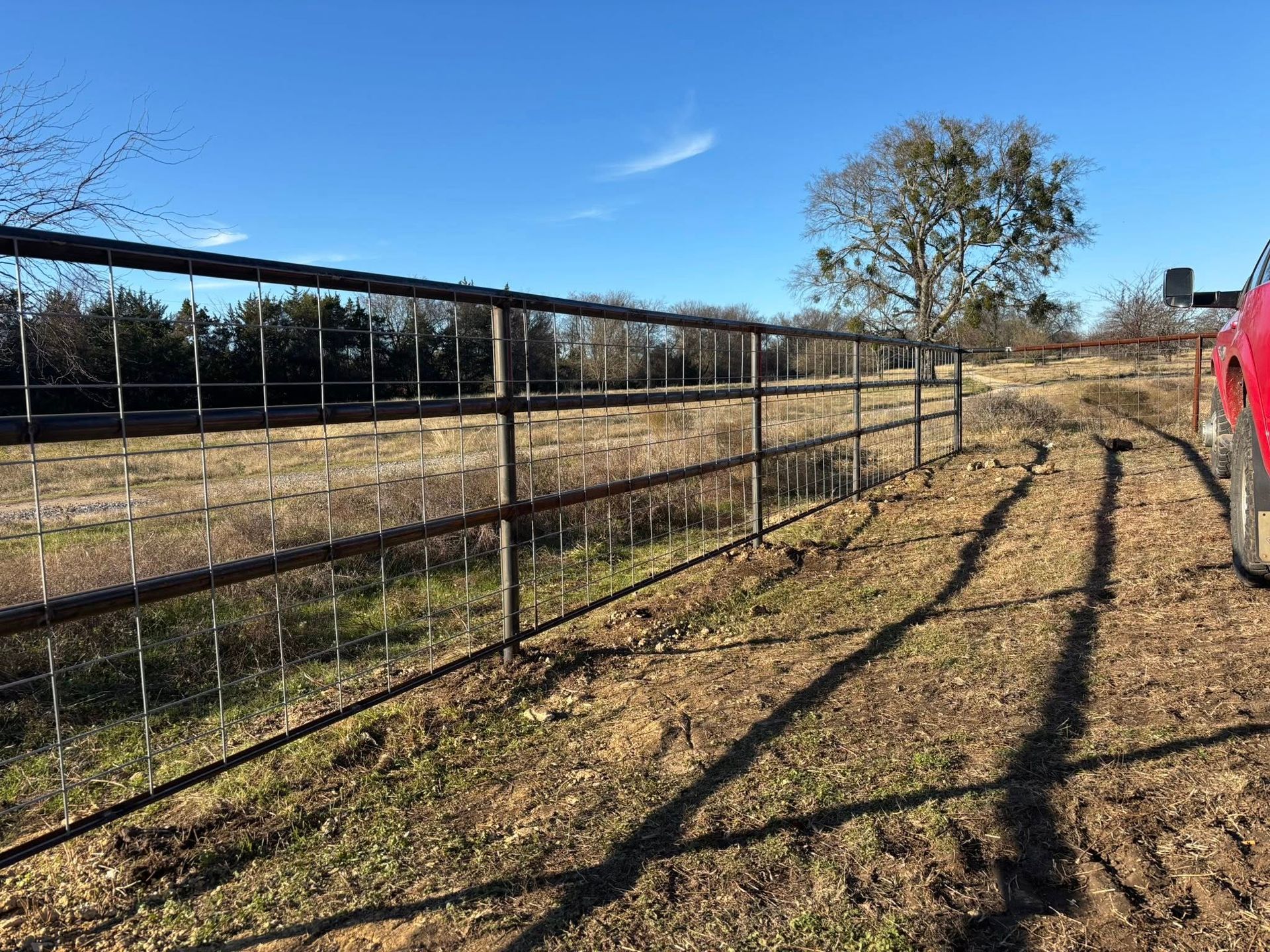
Livestock containment fails when fencing doesn't account for how animals behave near feeding areas, water sources, or shelter structures. Barn and farm fencing from Rockin' B Fence Co. addresses these high-traffic zones throughout Bryan County properties, creating secure boundaries around barns, livestock pens, and pasture divisions. The fencing withstands repeated animal contact in areas where cattle or horses congregate daily, and the layout adapts to Oklahoma ranch terrain that includes both flat bottomland and rolling hills.
This category of fencing includes combinations of materials selected for specific farm zones—board fencing near barns where visibility and appearance matter, pipe fencing in working pens where durability is critical, and wire fencing across larger perimeter sections where cost-effectiveness becomes important. Installation considers where equipment needs access, how animals move between areas, and which sections experience the most stress from weather or livestock interaction.
Schedule an on-site consultation to map fencing zones based on your barn layout, livestock flow patterns, and property access points.
How Farm Fencing Handles Rural Property Demands
Fencing around barns and working areas uses stronger materials than perimeter fencing because animals push against it more frequently, especially near feeding stations or shelter during storms. Wooden board fencing provides visibility that prevents horses from running into barriers, while pipe panels in sorting pens handle the impact from cattle being moved through chutes. Gate placement allows equipment access for manure removal, hay delivery, and maintenance without creating gaps that compromise containment.
Once Rockin' B Fence Co. completes installation, you'll notice livestock stay within designated areas without constant monitoring, equipment moves through the property without navigating around poorly placed barriers, and animals shift between barn areas and pasture through controlled access points. The fencing defines traffic patterns that reduce soil compaction in unintended areas, and the structure holds position even when animals crowd against it during feeding times or weather events.
Material selection for farm fencing depends on budget, animal type, and section purpose—board fencing costs more but provides the smooth surface horses need, while welded wire panels offer versatility for smaller livestock, and cable fencing works in areas where animals need containment but don't require solid barriers. Each material handles Oklahoma weather differently, with wood requiring more maintenance than metal but offering easier repairs when damaged.
Agricultural fencing decisions affect daily farm operations and long-term property management, so understanding what each option provides helps match materials to specific ranch sections.
Common Questions About This Service
What fencing works best near barn structures?
Board fencing or pipe fencing near barns handles repeated animal contact and provides clear visual boundaries that prevent accidental collisions, especially for horses. These materials also complement barn aesthetics better than wire fencing while offering the strength needed in high-traffic areas.
How is fencing designed for livestock sorting and handling?
Working pens use heavy-duty pipe panels or reinforced board fencing that won't shift when cattle push against it during sorting, with gates positioned to move animals efficiently through chutes. Corners are often rounded to prevent animals from piling up and climbing over barriers.
What ground preparation does farm fencing require?
Posts are set in holes deep enough to reach stable soil below topsoil and organic material, typically 24 to 36 inches depending on post height and soil type. Rocky areas in Bryan County may require augering or different post styles, which Rockin' B Fence Co. determines during the initial property assessment.
How does farm fencing adapt to sloped or uneven terrain?
Fencing follows ground contours by adjusting post heights and rail positions, or by using wire materials that conform to grade changes without leaving gaps underneath. Stepped installations work better on steep slopes where maintaining level rails becomes impractical.
When should existing farm fencing be upgraded or replaced?
Fencing showing extensive rot in wooden components, broken welds in metal panels, or posts that lean despite retightening should be replaced before failure causes livestock escapes. Upgrading also makes sense when expanding operations or changing livestock types that require different containment approaches.
Ranch and farm operators throughout southeastern Oklahoma work with Rockin' B Fence Co. to design fencing systems that improve livestock control and property organization. Request a customized fencing estimate that addresses your specific barn layout, animal types, and operational needs.