
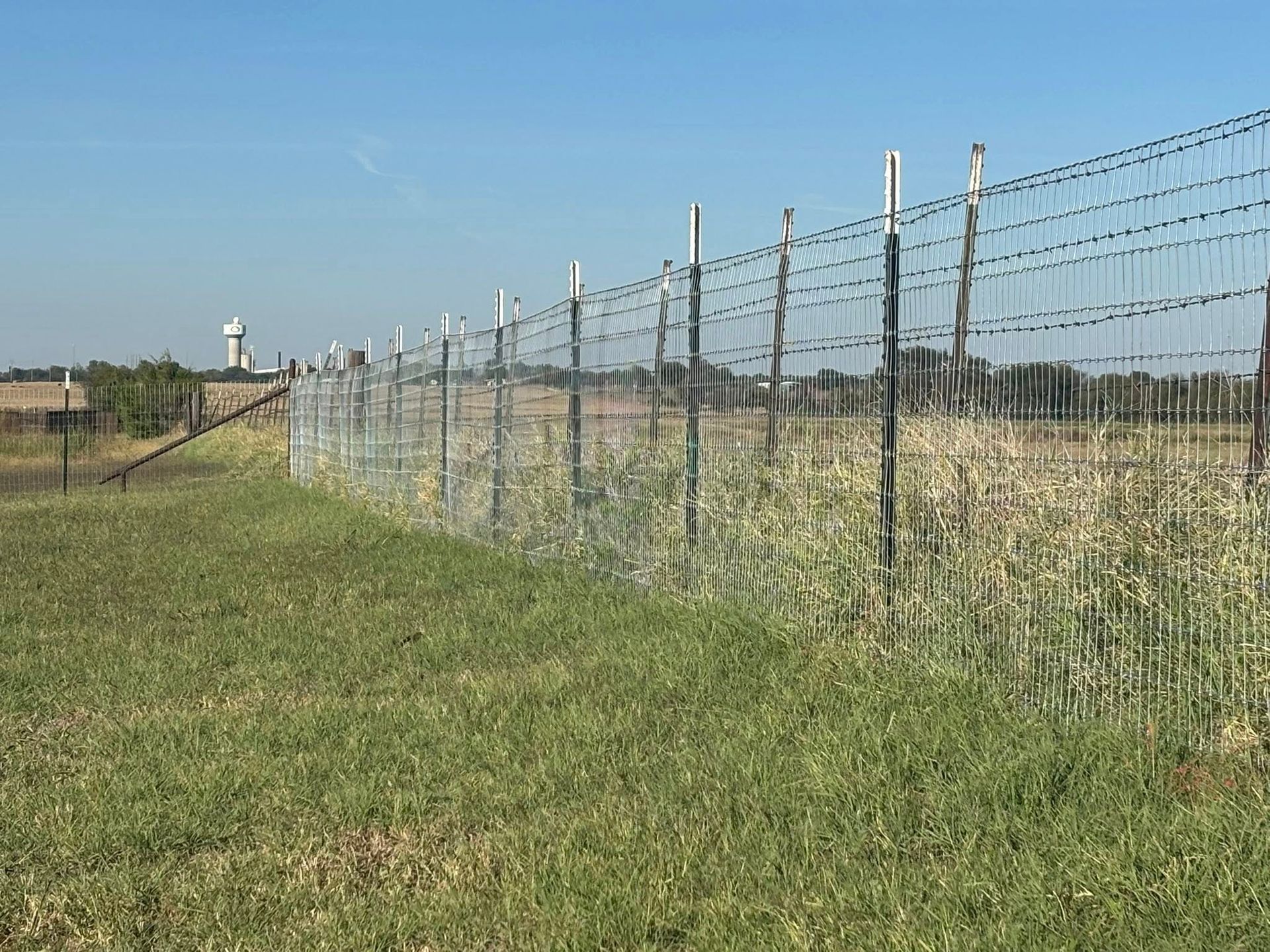
Livestock Containment Built for Oklahoma Ranches
Barbed Wire Fencing in Bokchito for Cattle Operations, Agricultural Security, and Rural Property Boundaries
Large acreage properties in southeastern Oklahoma face soil conditions that shift between clay and sandy loam, affecting how fence posts hold tension over time. Rockin' B Fence Co. installs barbed wire fencing throughout Bryan County for landowners managing cattle, marking property lines, or securing agricultural parcels. This fencing type handles the ground movement common in areas with seasonal moisture changes while keeping livestock contained within defined pastures.
Barbed wire fencing consists of high-tensile steel strands twisted with sharp barbs spaced at regular intervals, stretched between posts set deep enough to resist the pull from livestock pressure. The wire discourages cattle from leaning or pushing against the fence line without causing injury during casual contact, and the spacing between strands can be adjusted based on the type of livestock being contained. Corner posts and braces transfer tension loads into the ground, preventing the sagging that reduces fence effectiveness.
Arrange a property evaluation to identify corner brace locations and determine strand counts based on your livestock type and pasture layout.
Why Barbed Wire Fencing Works Long-Term
High-tensile barbed wire maintains tightness across long distances because the steel's elasticity allows the wire to handle temperature changes without losing tension, which matters during Oklahoma summers when metal expands and winter months when it contracts. Posts are installed with corner assemblies that include diagonal bracing, transferring the wire's pull into both vertical and horizontal planes. Line posts between corners simply hold wire height and spacing without bearing the same tension load.
After installation, you'll see cattle recognize the boundary and avoid testing the fence line once they've experienced the barbs during initial exploration. The wire remains taut across terrain changes, gates open into pastures without wire slack, and the fence holds position even when animals gather along it during feeding times. Vegetation clears easily from underneath, and the minimal surface area means wind doesn't stress posts the way it does with solid fencing.
Strand count depends on what you're containing—three or four strands work for cattle, while horses may require closer spacing to prevent leg injuries, and smaller livestock need additional lower strands to prevent animals from slipping underneath. The same installation approach applies regardless of strand count, with adjustments made to post height and brace spacing.
Agricultural fencing installations across Bryan County vary based on acreage size, livestock type, and soil conditions, and each decision affects how the fence performs over decades of use.
Answers to Frequent Service Questions
What type of posts work best for barbed wire fencing?
Steel T-posts work well for line posts because they drive into most soil types and resist rot, while corner posts typically use larger wooden posts or pipe set in concrete to handle the tension load from stretched wire. The combination balances cost with long-term durability.
How often do barbed wire fences need retensioning?
Properly installed high-tensile barbed wire can hold tension for years without adjustment, especially when corner braces are built correctly and posts are set at appropriate intervals. You may need to retighten wire if livestock damage a section or if a post shifts due to soil erosion.
What spacing between posts prevents sagging?
Line posts are typically spaced 12 to 16 feet apart in level terrain, with closer spacing on hills or in areas where livestock pressure concentrates, such as near gates or water sources. Rockin' B Fence Co. adjusts spacing based on your property's topography and how cattle move across pastures.
How does barbed wire fencing handle Oklahoma's clay soil?
Clay soil expands when wet and contracts during drought, which can shift posts unless they're set deep enough to anchor below the active frost and moisture zone. Corner assemblies with horizontal bracing resist this movement better than single vertical posts.
When should barbed wire be replaced instead of repaired?
Wire showing widespread rust, broken strands in multiple locations, or loss of tension across entire sections typically needs replacement rather than spot repairs. Individual damaged strands can be spliced, but once corrosion weakens the wire throughout, repairs become ineffective.
Landowners throughout southeastern Oklahoma rely on Rockin' B Fence Co. for barbed wire installations designed around specific agricultural needs and property characteristics. Contact us to schedule a site visit and receive a fencing plan tailored to your acreage and livestock requirements.